Most businesses obsess over the numbers they can easily read — sales data, margin reports, foot traffic figures.
They’re comfortable with a spreadsheet that tells a familiar story.
Meanwhile, their refrigeration units are quietly generating some of the most critical operational data on the floor. And in most cases, nobody truly knows what to do with it.
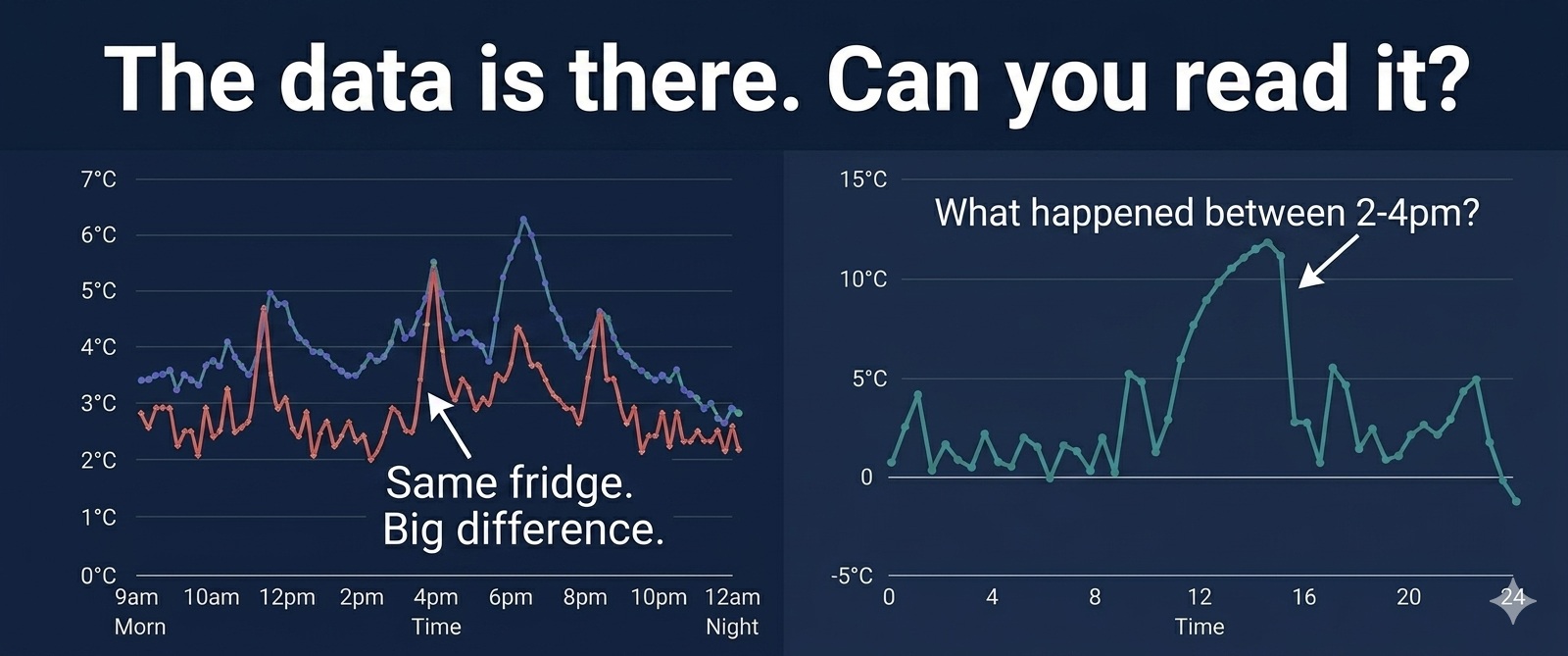
Temperature sensor data isn’t just numbers on a screen. It’s a real-time story about what’s happening to your food right now. A slow creep toward the danger zone overnight. A fluctuation that spikes every time the lunch rush hits. A pattern that keeps repeating, week after week, that nobody has ever connected to a problem.
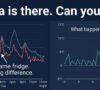
Here’s a real-world example: under-counter fridges are one of the most common pieces of equipment in commercial kitchens, yet it’s not unusual to find a 7-degree temperature variation from one end of the unit to the other. Same fridge. Same setting. Completely different temperatures depending on where your product is sitting. Is your monitoring system capturing that? More importantly, does anyone know what to do with it if it is?
And it gets more complex. The way product is stored directly affects airflow, which directly affects temperature. A fridge packed too tightly, or stacked the wrong way, creates dead spots where cold air can’t circulate. The data will show you this — if you know how to read it.
Cool rooms add another layer again. Temperatures don’t behave the same way in different parts of a cool room. Near the door, near the evaporator, at floor level versus head height — each zone tells a different story. A single sensor average won’t catch the problem developing in the corner.
The challenge isn’t collecting the data. Modern monitoring systems do that reliably. The challenge is interpretation — and that’s where most businesses fall short.
I’ve seen experienced refrigeration mechanics dismiss or flat-out argue with sensor data they don’t understand. That’s not a knock on their technical skills. It’s a reminder that reading a system and reading the data that system produces are two completely different disciplines.
If your temperature data is sitting in a dashboard that nobody is properly analysing, you don’t have a food safety system. You have a false sense of security.
I help businesses bridge that gap — turning raw refrigeration data into clear, actionable food safety decisions. If you’re ready to actually understand what your equipment is telling you, let’s talk.