There’s a phrase I hear on almost every install at some point — “your sensor’s wrong.”
We install a temperature monitoring device, the readings come through, and the number on the screen doesn’t match the fridge display or what the team expected to see. It’s a completely understandable reaction. When you’ve trusted a fridge for years, a new number that disagrees with it feels like the new thing must be broken.
For the past ten years I’ve been working with multiple temperature monitoring hardware types and digital food safety systems. Across all that time, and all the different hardware, fridges and kitchens, I’ve never once had a device that was truly inaccurate.
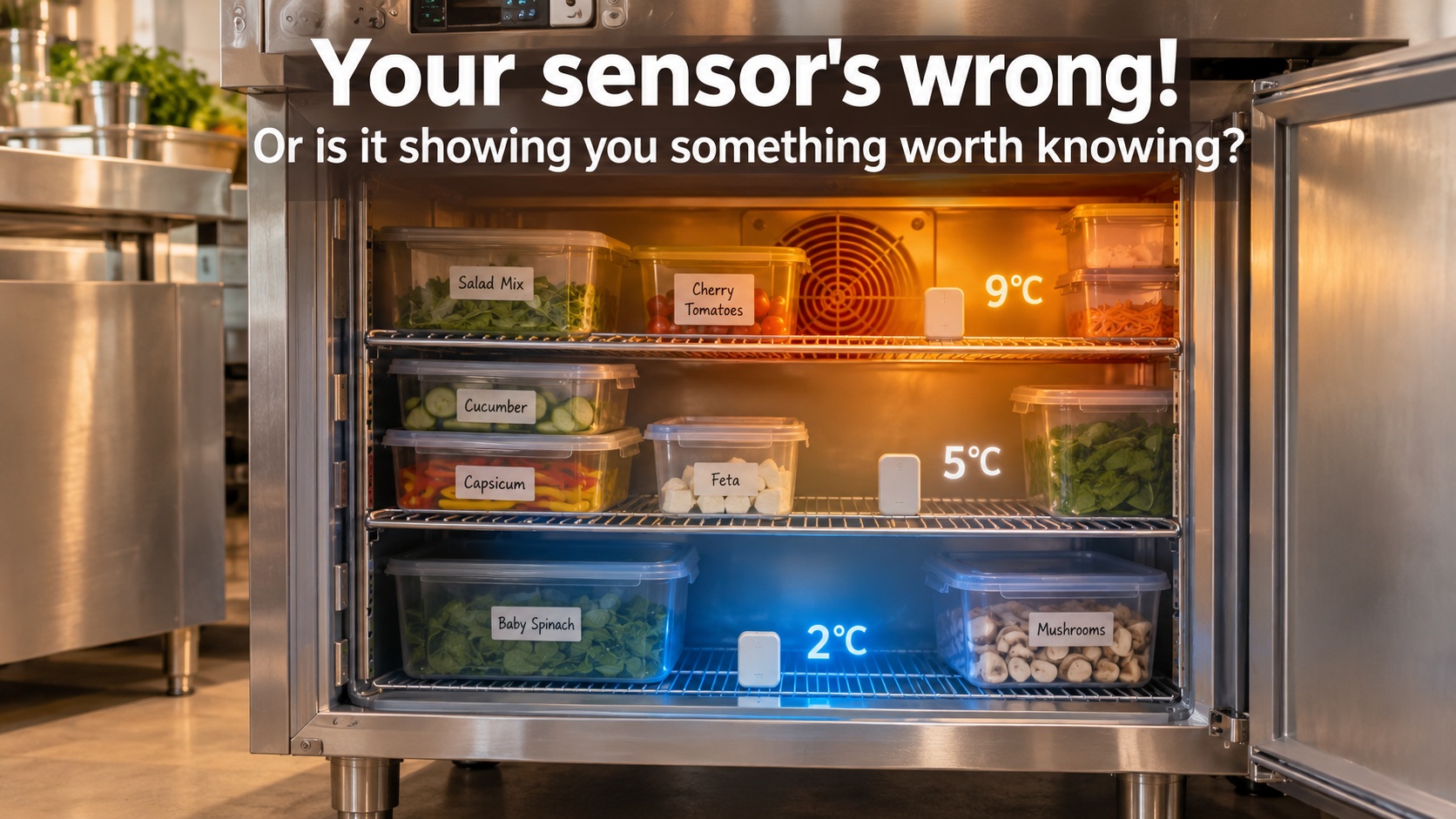
What I see, install after install, is placement. A sensor reports the temperature of the exact spot it’s sitting in, and inside a fridge that spot can be very different from the shelf right next to it. Small changes in position can show a surprisingly large variance. I’ve measured a 7-degree difference from one end of a three-door underbench fridge to the other. That usually comes down to product stacked against the fan, containers blocking the return air, or simply not enough space for cold air to move. We recently had a sensor in an icecream freezer moved during cleaning – the temperature changed from -18 to 2-degrees C, still “inside” the display.
The fridge isn’t lying, and neither is the sensor — they’re just telling you about different places.
I conducted a recent test placing five sensors through a domestic fridge – it showed almost an 8-degree variation from top to bottom . That matters, because domestic fridges are what we often find in aged care and hospital wards, holding patient snacks and supplements. These are some of the most vulnerable people we look after, and getting an honest reading from these units is genuinely tricky. Put the sensor in the cold airflow and you’ll see a lovely, safe-looking number. Meanwhile, the yoghurt on the top shelf could be sitting several degrees warmer.
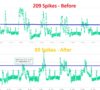
We’ve tested the usual workarounds too. Putting the sensor inside a container to soften the airflow and door openings, or sitting it in a bottle of water as a thermal buffer. This smooths out the spikes — but it does very little to change the average temperature. A calmer reading in the wrong spot is still a reading from the wrong spot.
So what’s the answer?
It starts with a different question — what temperature do you actually want to see? If the goal is a number that keeps the audit quiet, almost any placement will do. If the goal is protecting the food and the people eating it, you want the temperature of your warmest product, because that’s where the risk lives. It’s a bit like a health check — you can’t take a healthy skin sample and say there’s no cancer elsewhere.
Your sensor isn’t wrong — it’s showing you something worth knowing.
If a reading has surprised you lately, don’t move the sensor to make it look better. Give me a call, and let’s map that fridge together so you know exactly what your food is feeling.